
It’s Saturday morning, the sun is blazing, and instead of enjoying your backyard oasis, you’re wrestling with a tangled hose, skimming leaves, and wondering why the pool floor still looks grimy after an hour of effort. Sound familiar? For millions of pool owners, maintenance remains the least enjoyable part of ownership—a weekly chore that eats into precious relaxation time. This frustration has fueled a long-running debate in the pool care world: are robotic pool cleaners truly superior to traditional cleaning models, or is the older technology still holding its ground?
The answer isn’t as straightforward as marketing materials suggest. Choosing between a robotic cleaner and a traditional suction or pressure-side model depends on understanding how each technology actually performs where it matters most—cleaning efficiency, filtration capability, energy use, and thoroughness of debris removal. In this comparison, we’ll break down the mechanics behind both approaches, examine their filtration systems in detail, and ultimately help you determine which option delivers a genuinely cleaner pool for your specific situation.
The Fundamentals of Pool Cleaning Technology
Pool cleaning technology falls into two broad camps, each built on fundamentally different engineering philosophies. Robotic pool cleaners are fully autonomous, self-contained units that operate independently from your pool’s circulation system. They carry their own motors, filtration, and navigation intelligence—dropped into the water, they handle everything internally. Traditional models, by contrast, encompass suction-side cleaners that attach to your skimmer line, pressure-side cleaners that use water pressure from a return jet or booster pump, and of course the classic manual vacuum cleaner for pool floors that relies entirely on human effort.


The operational principles couldn’t be more different. Traditional cleaners harness your pool’s existing hydraulic system to generate movement and suction, essentially piggybacking on infrastructure already in place. They move somewhat randomly or in preset patterns, collecting debris and routing it through the pool’s main pump and filter. Robotic cleaners, meanwhile, use onboard electric motors to drive wheels or tracks, spin dedicated brush rolls, and pull water through their own internal filter cartridges or bags—all powered by a low-voltage transformer plugged into a standard outlet.
Over the past decade, technological advancements have dramatically widened the gap between these approaches. Microprocessors, gyroscopic sensors, and algorithm-driven navigation have transformed robotic units from simple roaming machines into methodical cleaning systems that map pool surfaces and adapt their behavior in real time. Understanding these foundational differences is essential before evaluating which approach actually delivers superior results.
Deep Dive into Robotic Pool Cleaner Features
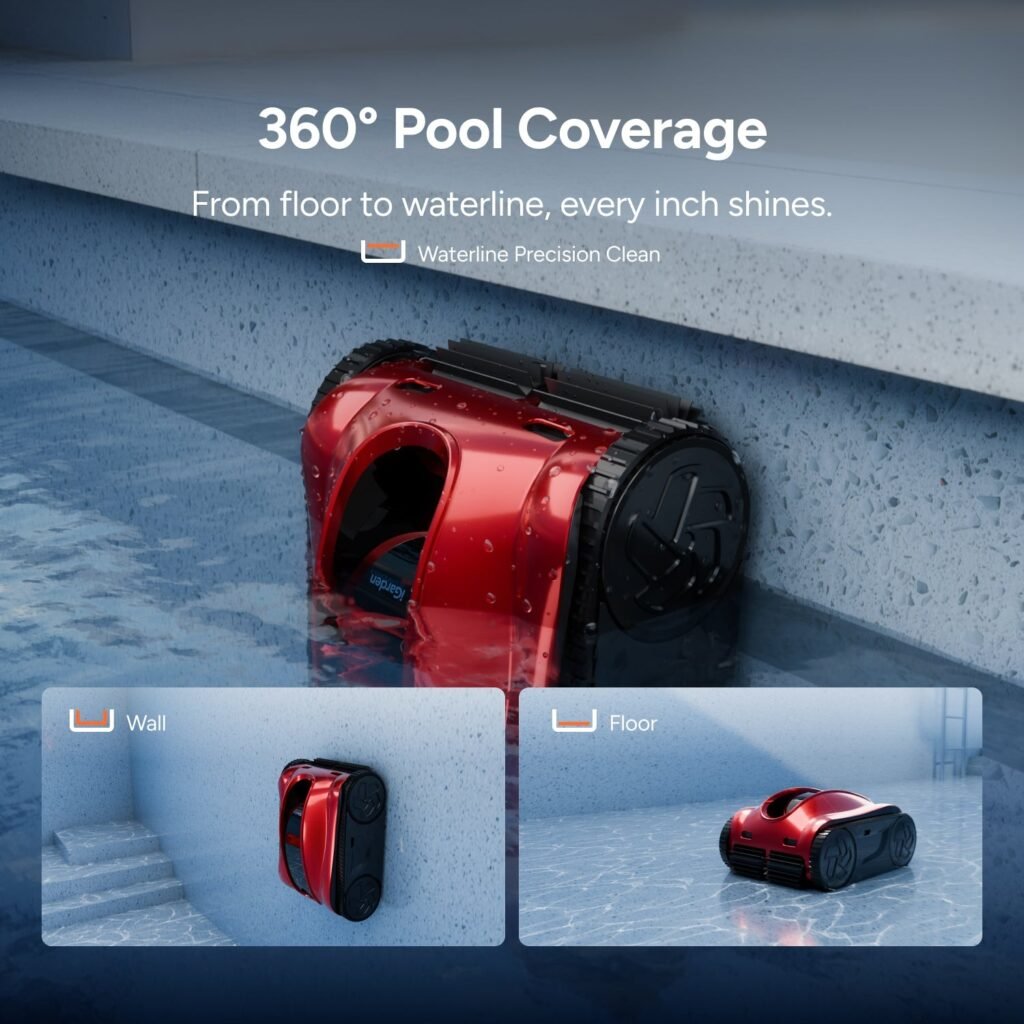
Modern robotic pool cleaners have evolved far beyond their early predecessors, incorporating components that would feel at home in consumer electronics rather than pool maintenance equipment. At their core, these machines combine powerful drive motors with dedicated suction systems and rotating brush assemblies—typically a combination of PVA foam rollers for smooth surfaces and bristle brushes for textured finishes like pebble or plaster. This dual-brush approach doesn’t just collect loose debris; it actively scrubs biofilm, calcium deposits, and algae from pool surfaces, something traditional cleaners rarely accomplish without manual intervention.
Energy efficiency represents another defining advantage. Because robotic cleaners run on low-voltage power supplies—typically consuming between 100 and 200 watts—they operate at a fraction of the electrical cost of running your pool’s main pump for extended cleaning sessions. A full cleaning cycle usually completes in two to three hours, compared to the six or more hours many pool owners run their pumps when relying on traditional cleaners to do their work.
See also: 10 Home Improvement Projects That Add the Most Value in the Midwest
Intelligent Navigation and Mapping Capabilities
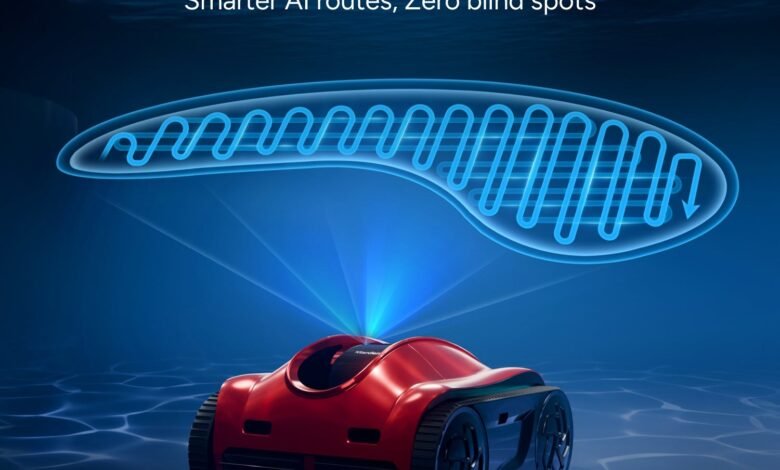
The most significant technological leap in robotic cleaners lies in their navigation systems. Entry-level models use gyroscopic sensors to track their orientation and distance traveled, enabling systematic back-and-forth patterns rather than random wandering. Higher-end units employ sophisticated mapping algorithms that scan pool geometry during an initial learning cycle, then calculate optimized cleaning paths that ensure complete coverage of floors, walls, and waterline tiles. Obstacle detection sensors prevent the unit from getting stuck on ladders, drains, or steps, while accelerometers help the machine adjust its approach when transitioning between flat surfaces and steep walls. The result is measurably more consistent coverage—independent testing has shown well-designed robotic cleaners achieve 95% or greater surface coverage in a single cycle.
Customizable Cleaning Programs and Cycles
Flexibility in programming gives pool owners granular control over their cleaning routines. Most mid-range and premium robotic cleaners offer multiple cycle options: quick cycles targeting only the pool floor for light maintenance, standard cycles covering floor and walls, and intensive cycles that add waterline scrubbing. Many units allow scheduling through onboard controls or smartphone apps, so cleaning happens automatically during off-peak electricity hours or before a weekend gathering. Some models let users designate focus zones—concentrating extra passes near steps where debris accumulates or along shaded walls prone to algae growth. This adaptability means the cleaner’s effort scales to match actual conditions rather than applying the same generic routine regardless of need.
Examining Traditional Pool Cleaner Models
Traditional pool cleaners have served homeowners reliably for decades, and their continued popularity stems from mechanical simplicity and lower upfront investment. Suction-side cleaners connect to your skimmer or a dedicated suction port, using the pull of your pool’s circulation pump to move across surfaces and vacuum debris directly into the pump basket or an inline leaf canister. Pressure-side cleaners take the opposite approach, connecting to a return jet and using pressurized water to propel themselves while sweeping debris into an attached collection bag. Manual vacuums—the most basic option—require you to physically guide a vacuum head across the pool floor while the pump provides suction through a telescoping pole and hose assembly.
What unites all traditional models is their dependence on your pool’s existing pump and plumbing infrastructure. They add no independent filtration or intelligence to the system; they simply leverage hydraulic force that’s already flowing. This makes them straightforward to install and maintain—fewer electronic components means fewer potential failure points. However, their movement patterns tend to be random or semi-random, driven by water flow dynamics and simple mechanical deflection rather than calculated routes. Cleaning thoroughness varies significantly from session to session, and areas like tight corners, steps, and walls often receive inconsistent attention without manual follow-up.
How Suction-Side and Pressure-Side Cleaners Operate
Suction-side cleaners rely on a diaphragm or turbine mechanism that converts the pump’s suction into locomotion. As water flows through the unit, internal components create a pulsing or crawling motion that moves the cleaner across the pool floor. Debris travels through the hose and into the pump strainer basket or a supplemental leaf trap installed inline. Because all collected material passes through the pool’s plumbing, larger debris like twigs or seed pods can clog the hose or reduce flow, diminishing both movement and cleaning power until the obstruction is cleared. Pressure-side cleaners operate differently—a jet of returning water spins an internal turbine that drives wheels, while a sweep tail stirs debris off the floor and into a mesh bag mounted on the unit. Some pressure-side models require a dedicated booster pump for adequate water pressure, adding to energy consumption and installation complexity. Both types move in largely unpredictable paths determined by hose length, water pressure fluctuations, and random contact with walls, meaning complete pool coverage often requires extended run times of four to six hours or more per session.
The Critical Role of Advanced Filtration Systems
Filtration capability arguably matters more than any other factor when determining which cleaner actually delivers a healthier, clearer pool. The fundamental difference comes down to where debris ends up after collection and how fine the filtration media can capture particles. This distinction directly affects water clarity, chemical balance, and how much maintenance your pool’s primary filtration system demands over time.
Filtration Effectiveness in Robotic Units
Robotic cleaners carry their own onboard filtration, typically consisting of fine-mesh cartridges or microfilter bags that trap particles as small as two to five microns—small enough to capture pollen, fine sand, dust, and even some bacteria clusters that cloud water. Many premium models feature multi-stage filtration where a coarse outer layer catches leaves and large debris while an inner ultra-fine cartridge handles microscopic contaminants. Because this filtration happens independently, none of that captured material ever reaches your pool’s main pump or filter. This dramatically reduces the load on your sand, cartridge, or DE filter, extending its lifespan and reducing backwash frequency. After each cleaning cycle, you simply remove the filter canister, rinse it with a hose, and replace it—a process that takes under a minute and gives you visible confirmation of exactly what was removed from your water.
Filtration in Traditional Systems
Traditional cleaners route all collected debris directly through your pool’s existing plumbing and into the main filter. Suction-side models send everything—leaves, grit, hair, and fine sediment—through the pump strainer basket and onward to whatever primary filter you have installed. While your pool filter handles this material, it accumulates faster, raising internal pressure and reducing flow efficiency sooner than normal circulation alone would cause. This means more frequent backwashing for sand and DE filters or more regular cartridge cleanings, each of which wastes water and temporarily disrupts filtration effectiveness. Pressure-side cleaners partially address this by collecting larger debris in their onboard bags, but fine particles still pass through and return to the pool water, relying entirely on the main filter during normal circulation to eventually capture them. The result is that traditional systems often leave microscopic particulates suspended longer, contributing to that slightly hazy appearance many pool owners notice even after running their cleaner for hours.
Analyzing Pool Cleaning Efficiency: A Head-to-Head Comparison
When you strip away the marketing language and focus on measurable outcomes, the efficiency gap between robotic and traditional cleaners becomes difficult to ignore. Cleaning time tells part of the story: a robotic cleaner typically completes a full cycle—floor, walls, and waterline—in two to three hours while consuming roughly the same electricity as a light bulb. Traditional suction and pressure-side cleaners need four to six hours of pump run time to achieve comparable coverage, drawing significantly more power through your pool’s main circulation system. Over a swimming season, that difference translates into meaningful energy savings and reduced wear on your pump motor.
Time, Energy, and Comprehensive Debris Removal
Debris removal completeness is where the comparison becomes most telling. Robotic cleaners actively scrub surfaces with rotating brushes while simultaneously vacuuming loosened material into their onboard filters—capturing everything from fallen leaves down to fine silt and algae spores in a single pass. Their calculated navigation patterns ensure systematic coverage, leaving fewer missed patches. Traditional models, moving randomly and relying on passive suction or pressure-driven sweeping, frequently leave corners undertreated and fine sediment partially disturbed rather than fully captured. Independent testing consistently shows robotic units remove a higher percentage of both visible debris and microscopic particulates per cycle. They also handle mixed debris types—combining large organic matter with fine sand or pollen—without the clogging issues that plague suction-side hoses. The consistency factor matters too: a robotic cleaner delivers roughly the same result every session because its path is algorithmically determined, while traditional cleaners produce variable outcomes depending on water pressure, hose positioning, and random directional changes. For pool owners who prioritize reliably clean water with minimal personal involvement, the autonomous approach demonstrably outperforms on nearly every efficiency metric.
Solving for Pool Owners: Making the Right Choice
Selecting the right cleaner ultimately comes down to matching technology to your specific circumstances rather than defaulting to whichever option costs less upfront or sounds most impressive. Start by honestly assessing your pool’s characteristics: a large pool with complex geometry—multiple steps, benches, or irregular shapes—benefits enormously from a robotic cleaner’s intelligent navigation, while a small, simple rectangular pool with minimal debris may be adequately served by a well-chosen suction-side unit. Consider your surrounding environment too. Properties with heavy tree cover, frequent dust, or proximity to agricultural areas generate debris loads that demand the superior filtration and consistent coverage robotic models provide. If your pool primarily collects only occasional leaves and surface dust, a pressure-side cleaner with its collection bag might handle the job acceptably.
Budget considerations extend beyond the purchase price. Factor in long-term energy costs, replacement parts, wear on your main pump and filter, and the value of your own time. Pool owners who want genuinely hands-off maintenance and prioritize water clarity should invest in a robotic unit—the upfront cost pays dividends through lower operating expenses, reduced chemical consumption from better filtration, and hours of reclaimed weekends. Smart home platforms like iGarden have made it easier than ever to integrate robotic pool cleaners into broader home automation routines, allowing scheduling and monitoring alongside other outdoor maintenance tasks. Those on tighter budgets who don’t mind occasional manual touch-ups and already have a robust pump system can start with a traditional model and upgrade later. Whatever you choose, align the cleaner’s capabilities with your actual cleaning challenges rather than paying for features you won’t use or settling for performance that leaves you supplementing with manual labor every week.
Which Pool Cleaner Delivers the Best Results for Your Needs
The comparison between robotic and traditional pool cleaners reveals clear differences across every meaningful metric. Robotic cleaners deliver superior filtration through self-contained systems that capture particles down to two microns, keeping microscopic contaminants out of your main filter entirely. Their intelligent navigation ensures systematic, repeatable coverage that traditional models simply cannot match with their random, hydraulic-dependent movement patterns. Energy consumption favors robotic units dramatically—completing thorough cleaning cycles in less time while drawing a fraction of the power that extended pump operation demands.
Under most circumstances, robotic cleaners produce a measurably cleaner pool. They scrub rather than merely vacuum, they filter finer particles independently, and they deliver consistent results regardless of water pressure variables or hose positioning. Traditional models still earn their place for budget-conscious owners with simple pools and light debris loads, particularly when upfront cost is the primary constraint. However, for pool owners dealing with heavy contamination, complex pool shapes, or those who simply refuse to spend weekends on maintenance, robotic technology represents the clear winner. Assess your pool’s size, your surrounding environment, and how much hands-on effort you’re willing to invest—then choose the technology that transforms your pool from a chore into the retreat it was meant to be.