
Database Design and Normalisation: Comparing RDBMS with NoSQL and Mastering 3NF for Data Integrity

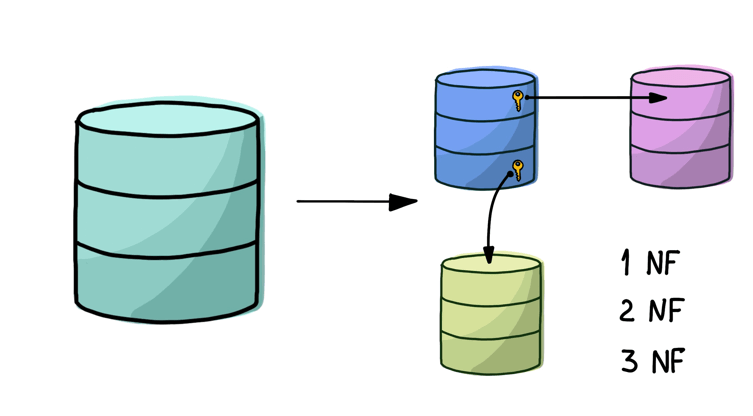
Most application issues that look like “bugs” are often data problems in disguise. Duplicate customer records, inconsistent order totals, missing product attributes, or slow reporting queries usually trace back to choices made during database design. For full-stack developers, understanding how to model data correctly is not optional. It directly affects performance, maintainability, and the reliability of business features. This article explains how relational databases such as PostgreSQL and MySQL differ from document-based NoSQL systems like MongoDB, and why Third Normal Form (3NF) remains a practical standard for protecting data integrity in many real-world applications.
Why Database Design Matters in Full Stack Development
A database is more than a storage layer. It is the contract that governs how an application remembers reality. When the structure is unclear, application code becomes filled with workarounds: manual deduplication, repeated validations, and complex joins or lookups that should not exist.
Good database design helps teams:


- Reduce duplication and conflicting data
- Support clear query patterns for features and analytics
- Enforce rules through constraints instead of only application logic
- Scale changes without rewriting large parts of the codebase
This is also why many learners in a full stack developer course in pune spend time on modelling and normalisation, not just CRUD endpoints. Solid design reduces long-term complexity and improves confidence in the system.
RDBMS vs NoSQL: What Changes in the Data Model
RDBMS: Structure, Constraints, and Predictable Relationships
Relational databases like PostgreSQL and MySQL store data in tables with defined schemas. Columns have data types, and relationships between tables are expressed using foreign keys. This structure enables strong consistency and reliable joins. It also allows you to enforce integrity rules at the database level.
Common strengths of RDBMS include:
- ACID transactions for safe multi-step operations
- Constraints like primary keys, foreign keys, unique indexes, and checks
- Mature query optimisation for complex joins and reporting
- Clear modelling for one-to-many and many-to-many relationships
If your application has workflows like payments, inventory, bookings, or compliance-driven audit logs, relational design is often the safer choice.
NoSQL: Flexible Documents and Denormalisation by Design
MongoDB stores data as documents, usually in JSON-like structures. It is schema-flexible, which means fields can differ across documents. Instead of splitting information across multiple tables, developers often embed related data inside a single document to avoid joins.
Typical strengths of NoSQL include:
- Flexible structure that adapts quickly to changing requirements
- Natural modelling for nested data, such as user profiles with preferences
- Easy horizontal scaling patterns in certain scenarios
- Fast reads when the document shape matches the access pattern
However, flexibility comes with trade-offs. Without careful conventions, it is easier to introduce inconsistent data. You can add validation rules in MongoDB, but relational constraints are usually stricter and more straightforward for guaranteeing integrity.
See also: Mutf_In: Icic_Pru_Tech_Aw67gu
Understanding Normalisation and Why 3NF Still Matters
Normalisation is the discipline of structuring relational data to reduce duplication and prevent anomalies when inserting, updating, or deleting records. The goal is not academic purity. The goal is to stop real operational problems.
What 3NF Achieves
A table is in Third Normal Form when:
- It is already in 1NF and 2NF (atomic values and proper dependencies)
- Every non-key column depends only on the key, not on other non-key columns
In simpler terms, 3NF helps you avoid storing facts in the wrong place.
A Practical Example
Imagine an Orders table that contains:
- order_id
- customer_id
- customer_email
- customer_phone
- shipping_address
- order_total
The customer contact details do not belong to an order. If a customer changes their email, you would have to update every historical order row. That creates inconsistent records and makes reporting unreliable.
A 3NF-friendly approach is:
- Customers table stores customer_id, email, phone
- Orders table stores order_id, customer_id, order metadata
- The addresses table stores address details, linked to customers or orders, depending on business rules
Now the customer email exists in one place. Updates are correct by default, and the system becomes easier to reason about.
When to Normalise and When to Denormalise
3NF is a strong default for transactional systems, but denormalisation is sometimes necessary for performance. The key is to denormalise intentionally.
Consider denormalising when:
- Read performance is critical, and joins become a bottleneck
- You have stable “snapshot” fields,s such as order_total,l that should not change after checkout
- You maintain derived fields with clear rules and automated updates
Even in MongoDB, the same thinking applies. Embedding can improve read performance, but duplicated data must be managed carefully to avoid inconsistencies.
Choosing Between PostgreSQL, MySQL, and MongoDB
Use PostgreSQL or MySQL when you need strong consistency, constraints, and complex querying. Use MongoDB when your data is naturally document-shaped, schema changes frequently, or your access pattern benefits from retrieving a full object in one read.
For many full-stack applications, a hybrid approach also works. For example, store core transactional data in PostgreSQL and store logs, events, or flexible user-generated content in MongoDB. Professionals often explore these architectural trade-offs in a full stack developer course in pune because real projects rarely fit a single storage pattern.
Conclusion
Database design is a long-term decision with everyday consequences. Relational databases offer strict structure and integrity controls, while NoSQL databases provide flexibility and document-oriented modelling. Mastering 3NF gives developers a reliable way to prevent duplication, avoid update anomalies, and keep data consistent as applications scale. By choosing the right model for the problem and applying normalisation thoughtfully, teams build systems that are easier to maintain, safer to evolve, and more trustworthy for both users and the business.